
It all depends on your point of view
We know that farming is cyclical and volatile. Brief epochs of windfall profits punctuate long periods of squeezed margins and all-out struggle just to break even. And yet—for 25 years (and more) balance sheets have benefited from steadily rising asset prices, serious financial losses have (thus far) been insured and subsidized out of existence. A whole generation of seasoned professionals, well into the second half of their careers, haven’t had to navigate an 80s-style event.
Those events are inevitable and the longer the deferral, the more severe the adjustment.
It is anyone’s guess as to whether ag is entering that epoch now. Smatterings of hard data and many other anecdotes suggest yields are off trend 20% with some crops or locales being nearer 40% off. It works out to potential 7-figure setbacks on the largest MN farms; how much insurance and subsidy offsets remains to be seen, but you’ll recall some of my early tests suggest that regardless, negative working capital and stressed balance sheets are very likely for many.
Enough to spark a more general return-to-rationality of costs? More guesswork, but the attrition rate at the height of the 80s crisis spiked but remained below 2% annually, and fell steeply from there. It was enough to send land costs plummeting 50%. What has happened, can happen again.
In defense of the unseasoned…this trend is OLD. There’s much to be said for a lightly-stoic “grin-and-bear-it” attitude to garden-variety volatility. It takes some real doing, and a maybe slightly morbid bent (ahem) to find the fragility and risks baked into the “good times.”
Berkshire Hathaway is sitting on $400 billion in cash. Buffett’s success is rarefied because “buy low/sell” high is about as difficult to execute as it is easy to say. It wouldn’t work if many people, including those who are credentialed, well-intentioned, intelligent, didn’t manage in real life to do the exact opposite.
It is a challenge. Look at all the persistent evidence of permanent trends in financial conditions [stipulating that one doesn’t look under the hood too much, or insistent on a data history longer than a generation].
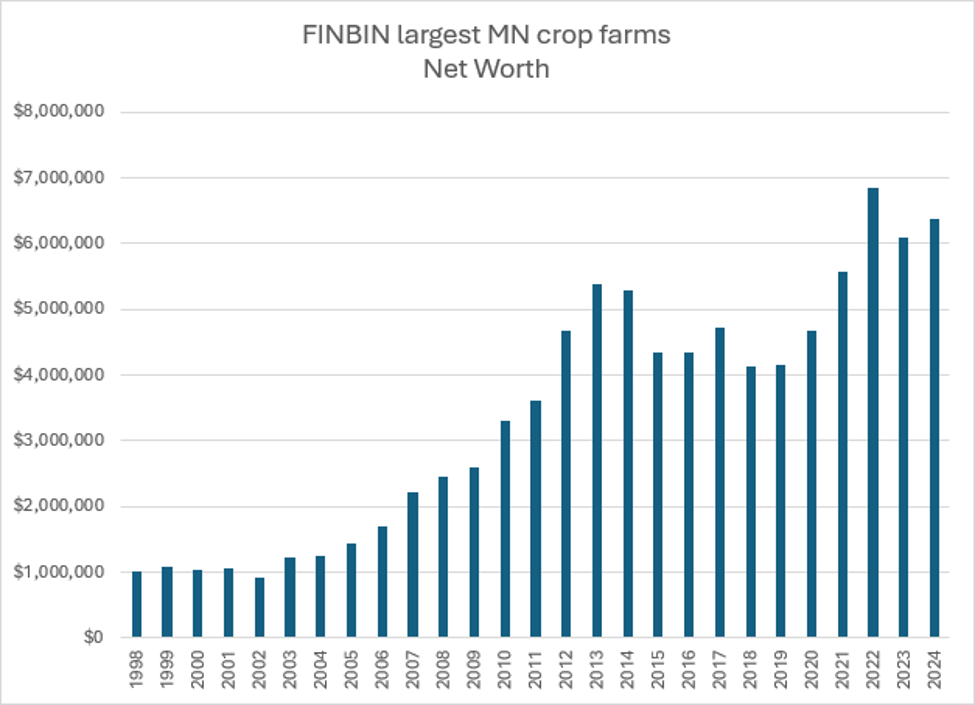
The largest farms in MN have an average net worth that places them in top 4% if US households. Sure, land valuations are inflated (as I argue), but at $7,000/acre in FINBIN, there is some exercise of conservatism.
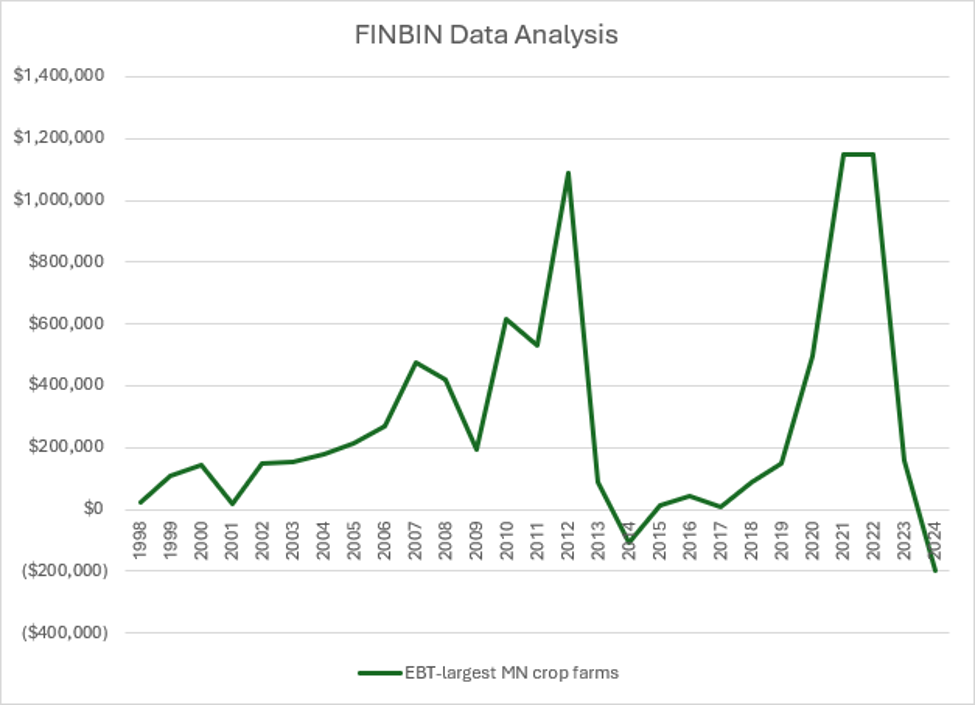
Then there’s reported operational profits. Losses of any magnitude are vanishingly rare.
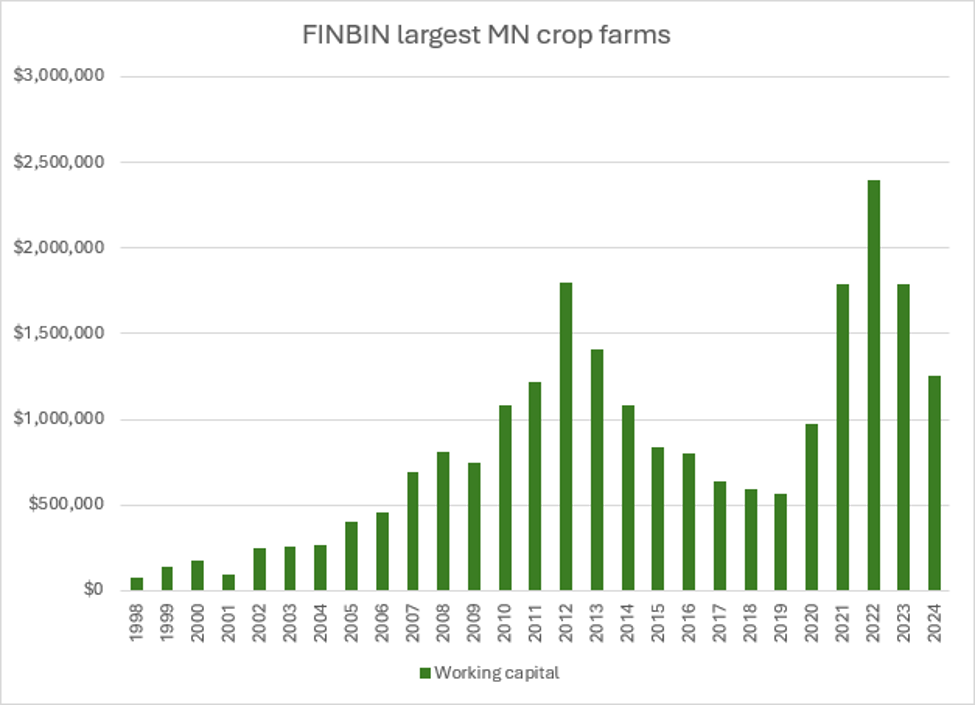
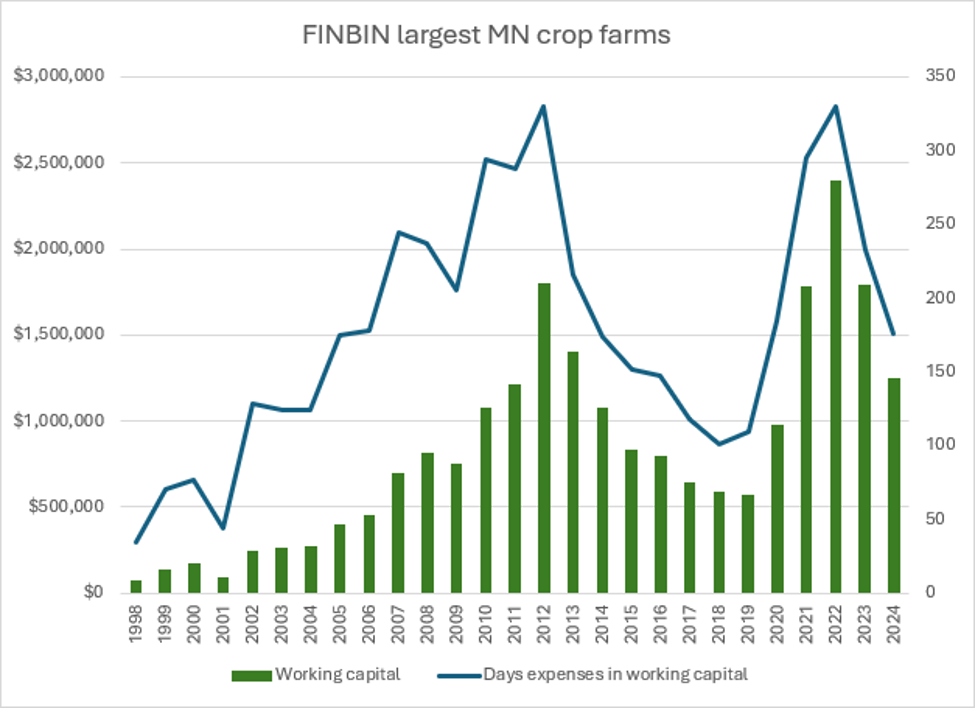
Finally, here is working capital. Like the other key measures, it demonstrates cyclicality but no major crises [in evidence…before the Big Print you and I are aware of how these farms teetered on the edge of illiquidity in 2019], and the trend is a wonderfully steep line upward.
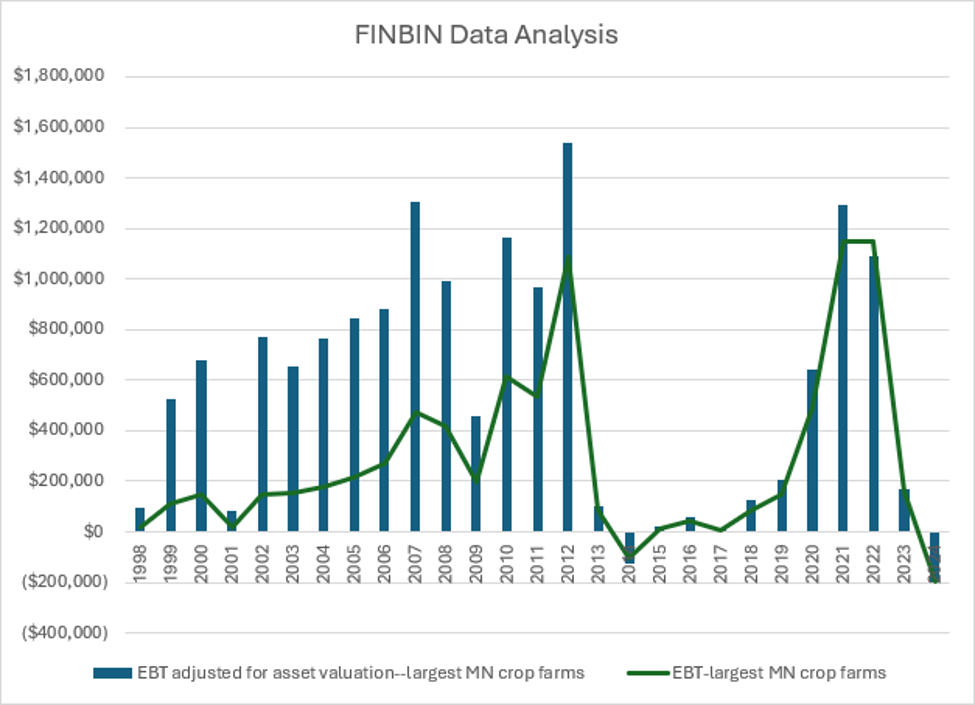
Doing what I do and peeling back the curtain, we get some deeper and less rosy insights. Profits, when adjusted for the assets (at market) deployed to generate them, are far less remarkable of late than prior to 2013. Our brief recovery was a faded one.
Likewise, working capital measured against operations (while still historically strong, nominally) isn’t quite as resolutely positive.
25 years+ is a long time to forget. At the bottom end it fosters complacency, lazy thinking, presumption, and poor investments. Unraveling it is necessary to resume real growth but after all this apparent stability, events may be crazy.
It’s all about keeping it in the right frame…perspective, if you will.